
Run Away 3D
Play More Games
Snail Bob 4
Temple Run 2
Raft Wars Multiplayer
Ragdoll Football
Shortcut Race
Granny 3 Return The School
Square Bird
Geometry 3D
Fireboy And Watergirl 2
Square Wars
Geometry Dash Meltdown
Stick Duel The War
Geometry Dash Hardcore
Candy Crush
Brawlball
Soccer Bros
Billard Golf
Subway Surfers NYC
Snail Bob 3
Snow Road 3D
Basketball Legends
Squishy Bird
Fat Slice
Geometry Dash Full Version
Color Rush
Fish Eat Getting Big
Forward Assault
Run Away 3D
Subway Surfers Bali
1V1.LOL
Run Away 3D Overview
Run Away 3D is a fast action runner game that combines clear 3D visuals with nonstop pacing and smooth movement. The game places you in the role of a character who must sprint forward through long corridors, twisting pathways, and open lanes while avoiding obstacles, hazards, and sudden drops. Unlike slower games where you have time to think before acting, Run Away 3D pushes you forward with steady speed, forcing split‑second choices and quick reactions. Each attempt feels lively because the track changes direction, height, and layout while you run, which means your focus must stay sharp from start to finish.
Right from the first second, the appeal of Run Away 3D lies in its simple concept — keep moving forward without falling or hitting the obstacles — but the execution demands real attention. You do not control the character’s forward momentum; they move ahead automatically. Instead, your job is to steer, jump, and slide at exactly the right moments to dodge gaps, barriers, and traps. This keeps your hands and eyes actively involved in every second of play, and each successful run offers a satisfying sense of progression as you cover more distance and improve your timing.
If you enjoy runner games that reward quick reflexes, clear focus, and smooth controls, Run Away 3D delivers all of that right in your browser. Whether you play for only a few minutes or stay for longer sessions, the game’s combination of speed, challenge, and visual clarity makes it a compelling choice for both casual and dedicated players.
How to Play Run Away 3D
Run Away 3D keeps its controls easy while the gameplay stays lively and demanding. On a keyboard, you typically use the arrow keys or A/D keys to move left and right. A separate jump key helps you leap over gaps or land on higher platforms. On mobile devices or touchscreen controls, swiping left, right, and up performs these same actions. The automatic forward motion means you never stop moving unless you fall or hit an obstacle, so every moment counts.
The main goal is simple: stay on the path and cover as much distance as possible. However, the path is not a smooth straight line. It curves, dips, rises, and sometimes splits into multiple directions. You must decide quickly which route to take, especially when the track forks or unexpected hazards appear. Bad timing can send you falling off the edge or crashing into a barrier, ending your run and resetting your progress.
As you continue, the game introduces more complex obstacles. Some platforms may move, disappear, or require precise timing to land on. These changes make each section feel unique and help Run Away 3D stay engaging even after many runs. The more you play, the better you understand how jumps, direction changes, and timing come together to form a successful run.
Speed and Reflex Challenge
One of the key features of Run Away 3D is its pace. The character constantly moves forward at a steady but brisk rate. You never get a moment of complete rest. This encourages a rhythm of quick decisions and immediate reactions. For example, if you see a narrowing path ahead, you must move toward the center quickly. If you notice a gap opening on the side, you jump instinctively. The game rewards players who learn to think ahead by scanning the track just a bit earlier than where the character currently stands.
Successful runners develop a sense of anticipation. They do not just react to obstacles as they appear; they predict them and adjust their position early. This skill becomes especially useful when the track includes sudden changes in direction or height. Observing patterns in how the track evolves helps you avoid unnecessary falls and cover more ground.
If you enjoy reflex‑driven games that test your timing and anticipation, you might also like Run 3 or Escape Road, which also combine fast movement with obstacle navigation in clean 3D or 2D environments.
Visual Style and Design
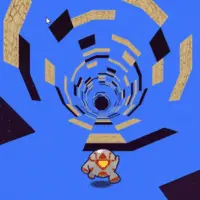
Run Away 3D uses clear and colorful 3D graphics that make it easy to see where you must go and what you must avoid. The clean design ensures that obstacles, gaps, and pathways stand out against the background, so your attention stays focused on the task rather than on distracting visuals. The smooth animation and consistent forward motion give the game a fluid feel that matches the urgency of the challenge.
The track itself often looks like a futuristic path or elevated runway floating through space or bright open landscapes. These open environments help you judge distances and depth, which is crucial when timing jumps or steering toward openings. Because nothing looks crowded or overly complex, you can follow your character’s movement easily and make split‑second decisions without visual confusion.
The visual clarity of Run Away 3D makes it comfortable for players of all ages. Whether you are new to runner games or experienced, the simple aesthetic supports intense gameplay without overwhelming your senses.
Game Progression and Replay Value
Run Away 3D does not rely on levels that you clear one by one. Instead, its challenge comes from the distance you achieve in each attempt. The farther you go, the better you have performed. Each run ends when you fall or hit an obstacle, but that only motivates you to try again to beat your previous mark. This loop of attempt, learn, and retry forms the heart of the game’s replay value. It is easy to play for short bursts — just a few quick attempts — yet also satisfying to return repeatedly to chase a higher score.
Unlike games that rely on upgrades or power‑ups, this one focuses entirely on player skill. Your progress is measured by how well you learn the track’s rhythm and react in time. Over multiple runs, you begin to notice patterns in the path and adjust your movements to match those cues. This feeling of gradual improvement keeps you engaged as you see your best distance grow with practice.
Games like Space Is Key or Slope 2 also reward repeated play and steady improvement, making them good companions if you enjoy challenge‑oriented runners.
Tips to Improve Your Runs
Even though Run Away 3D is easy to start, steady improvement comes from practice and observation. Here are some helpful tips to last longer and improve your score:
- Focus on the track ahead instead of just your character’s feet.
- Use small side‑to‑side adjustments to stay centered on narrow paths.
- Time your jumps so you land with stability rather than at the very last moment.
- Stay patient — rushing into a jump often leads to falls.
- Practice repeatedly to learn how different obstacles behave.
These habits help refine your timing and reduce mistakes that cut your run short. With each attempt, you learn more about how the track shifts and where careful movement matters most.
Why Run Away 3D Is Worth Playing
Run Away 3D brings together smooth 3D visuals, simple controls, and intense forward motion into a runner game that feels both friendly to new players and rewarding for those who want to improve. Its focus on reflexes and anticipation keeps you engaged without complicated menus or difficult learning curves. Every run presents a fresh challenge and a clear goal — go further than last time. Because the game runs right in your browser, you can start playing instantly, making it a great pick for both quick breaks and long play sessions. Whether you are chasing a personal best or just enjoying the rush of dodging obstacles, Run Away 3D offers steady, exciting action.